The Tattooed Dragon
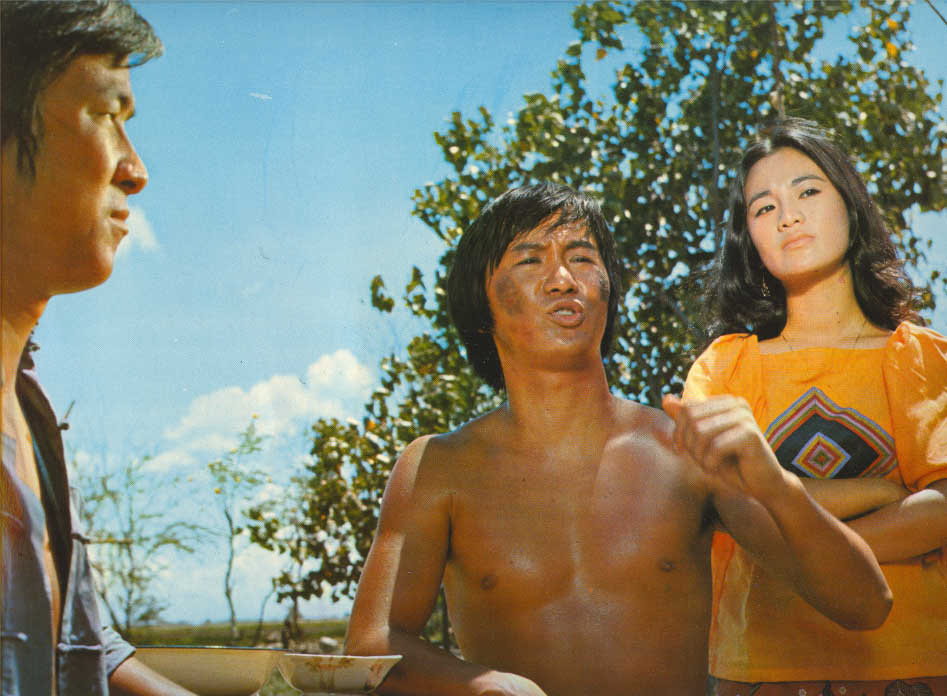
Director: Lo Wei
Year: 1973
Rating: 6.0
By 1973 both director
Lo Wei and superstar Jimmy Wang Yu had moved away from the paternal embrace
of the Shaw Brothers for other opportunities. By doing so they had also
left behind the glossy Shaw look and their comparatively high budgets. This
is fairly obvious in this very generic Golden Harvest kung fu production
with little if any money spent on sets or costumes. It feels like light years
from some of Wang Yu’s classic Shaw films such as The One-Armed Swordsman.
Lo Wei by this time had been slotted into being a kung fu director – perhaps
an awkward shift for him as his strength in the Shaw films had been fun sleek
caper/spy films and costumed wuxia movies often starring Cheng Pei-pei. But
his success with Bruce Lee and the sudden explosive popularity of kung fu
films forced a number of directors to quickly take on this mantle. The low
budget aspects of these films – putting actors into contemporary outdoor
settings and letting them bash one another – also fit neatly into the cash
strapped strategy of Golden Harvest in its start-up years.
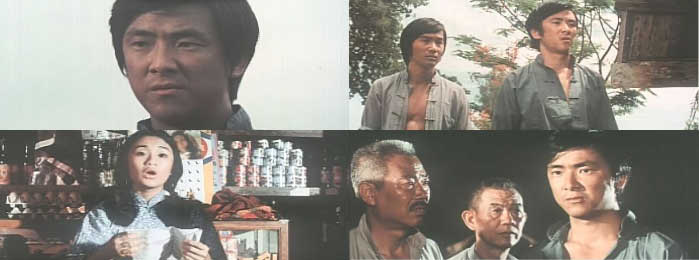
For all the criticism Lo Wei has received over the years, the one thing
that can’t be denied is that though his talents may be questioned he certainly
seemed to recognize talent in others. Here he brings on two young actors who
both went on to very successful careers. According to on-line filmographies
this was the debut for Sylvia Chang who Lo Wei also used the next year in
Slaughter in San Francisco. This Taiwanese actress soon broke loose of Lo
Wei and began to shuttle back and forth between Hong Kong and Taiwanese productions.
Sam Hui was still in the early stages of figuring out how to proceed with
his career as Golden Harvest initially seemed intent on making him into a
genial action comedy star with a bit of a bumpkin personality (here, Chinatown
Capers, Back Alley Princess). Within a few short years of course he found
his true comedic footing in the classic films with his two brothers, Michael
and Ricky. In the early 1980’s both Sam and Sylvia found themselves working
together again as two thirds of the equation in the Aces Go Places series.
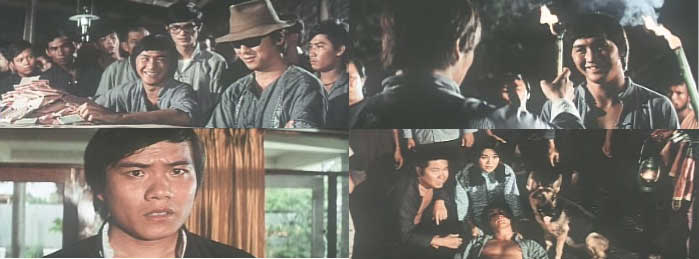
This film begins with promise - a Leone like credit sequence overlaid with
a Shaft type score and two quick fight sequences – before it slumps into a
lengthy exposition that won’t make anyone’s pulse beat faster. Though not
identified, the first fight sequence appears to take place among the splendid
ruins of Ayuthaya, the ancient capital of Thailand. Here the Tattooed Dragon
(Wang Yu) sets upon a gang of thieves who stole money from the Chinese Overseas
Charity. The Tattooed Dragon named for a large tattoo on his back seems to
be a kung fu Samaritan who goes around helping the downtrodden for no compensation
– perhaps a trust baby. In the ensuing fight he is injured and makes his escape
to a martial arts dojo. Here he is tracked down and again is injured and
again runs away leaving the dojo members to fend for themselves – not exactly
the stuff kung fu heroes are suppose to be made of.
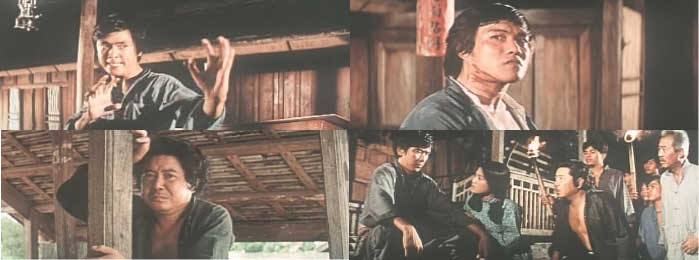
This time he is taken in by Yang (Hui) a poor farmer who raises ducks and
has a master plan to raise enough ducks to buy pigs and then raise enough
pigs to buy cattle and then raise enough cattle to take over the world and
marry his sweetheart Hsiang (Sylvia). She worries that by the time this plan
works she will be an old maid. They tend to the Tattooed Dragon along with
their friend Kun (Lee Kwan). When not tending to his ducks, Yang practices
kickboxing. Coincidentally, the boss (James Tien) discovers that underneath
the village where Yang lives are deposits of minerals and he develops an ingenious
plan to take over the land. Knowing that Chinese men are all gambling addicts
and will gamble until they lose everything, he installs a casino in town
and sure enough all the men are lining up to play and forgetting their wives,
children and work. Soon they are losing their land as well.
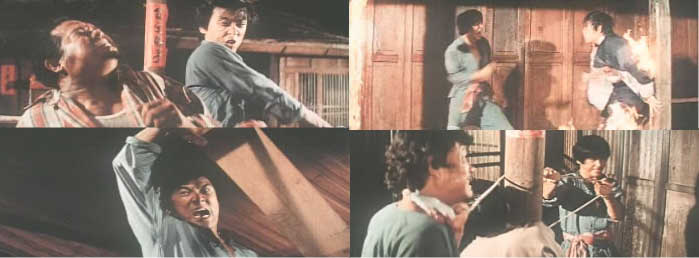
The Tattooed Dragon steps into this with both his gambling (he can tell
what dice have been rolled through his acute hearing) and fighting skills
and the final fight between him and the gang is actually fairly decent –
though you can easily see that the stunt men slow down occasionally to allow
Wang Yu the time to get into position for the next move. Tien gets extra
credit for allowing himself to be set on fire and continuing to fight. Tien
would go on to a solid career as the villain in many films to come. In the
tradition of all townsfolk in movies, they stand around and allow the hero
to do all the killing.
The VCD for this one had a reasonably clear clean
picture – was widescreen – but the English subtitles were quite small and
often blended in with the background.
Lobby
Cards