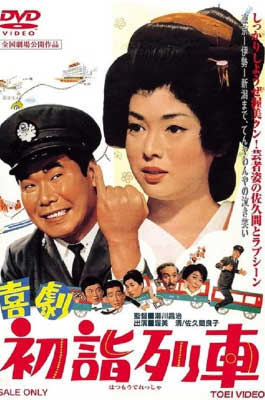
A couple of years before he was to begin
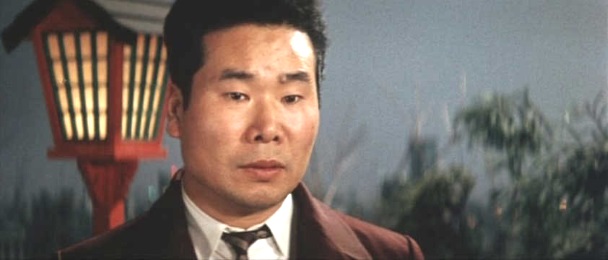
his life long journey as the iconic Tora-san, Kiyoshi Atsumi made a few comedies
(Kigeki) as a kindly but klutzy train (Ressha) conductor. This is the second
one I have come across and they are genial light films. I have been watching
a 15-series documentary titled Great Japanese Railway Journeys. Quite informative
and gives some history about the importance of trains in Japan; in particular
the high speed trains (Shinkansen) which went into operation in 1964 and
signled to the world that Japan was back. During these years, there has never
been a fatality. Thus being a conductor is a high status job and even though
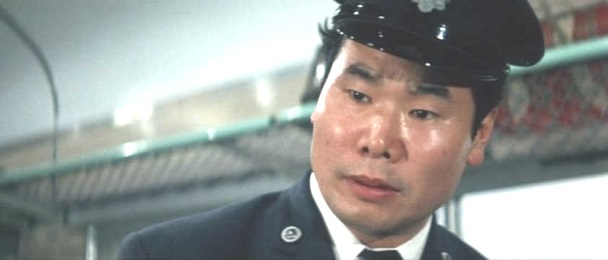
Ueda (Kiyoshi) is not on a Bullet Train, he is filled with pride for his
job.
Similarly to the other film (Express Train)
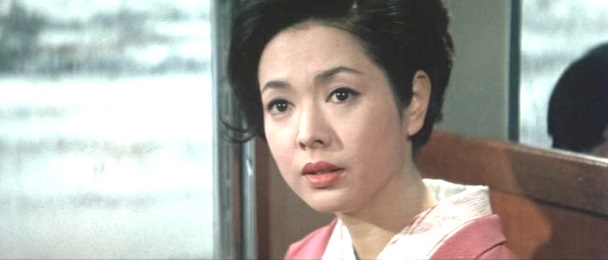
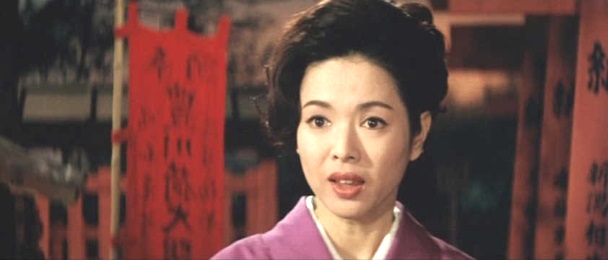
in the previous year, Ueda sees a woman (the adorable Tamao Nakamura) that
he had a crush on years earlier. He was her protector as children.
And though married, he feels the need to help her now and his crush comes
roaring back. He and a friend go to a nightclub and he discovers that she
is a geisha and he saves her from a handsy drunk customer. Her brother has
quit his job and gone missing. Ueda promises to find him and it turns into
something Peter Sellers would have eaten up. The search first takes him to
a prostitute who tries to undress him, then a modern art studio where he
is used as a paint brush, then he has to join a musical ensemble that uses
tools as instruments. He is constantly told what an unattractive face he
has. Open your eyes, he is told. They are open. Kiyoshi had famously small
slits for eyes on a broad peasant face.
He finally locates the brother who has gone
bohemian with no job and hanging out in a groovy club with an all female
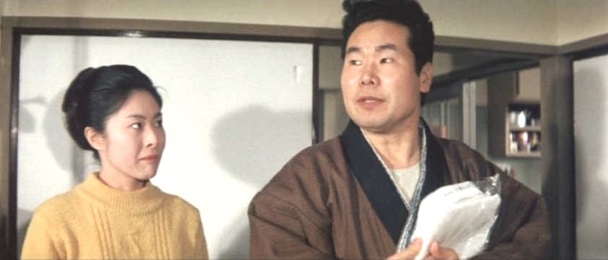
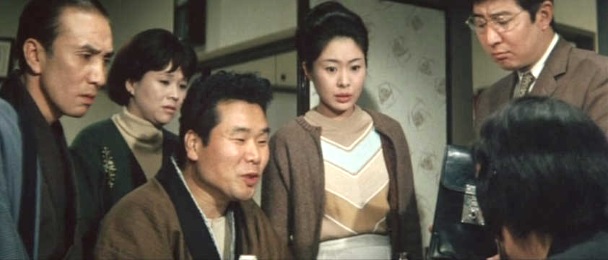
rock band and drugs. Meanwhile, his wife grows suspicious and hires his brother
to spy on him. It gets more chaotic as his wife brings in a psychiatrist
to observe him. Low key comedy with an oddly bittersweet ending. Directed
by Masaharu Segaw