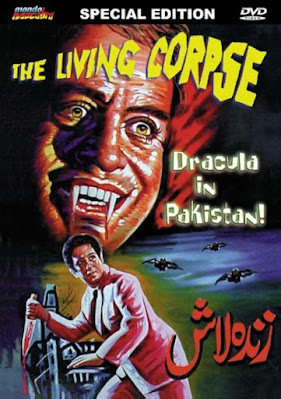
It has all the makings of a low budget Universal
horror film of the 1930s. A Dracula sequel of some sort. Shot in black and
white, a mysterious Gothic mansion with a long staircase that none of the
locals will go near, a man in a black cape who only goes out at night, fog
and shadows, women seductively offering their necks to be bitten and a few
musical numbers. What? Musical numbers? Yes, because this was right out of
Pakistan in 1967. The first horror film made in that country. It was rated
X and apparently had people fainting in the cinema. My guess is though that
the X isn't so much for the horror that now seems quaint and tame, but for
the explicit desire that the women express to be bit that is clearly meant
to be sexual. They are literally panting for it.
I expect that not many of us have seen a
Pakistani film. At one time in their Golden Age during the 1960s and 70s
they were turning out so many films that they were ranked fourth in the world.
But very few if any were distributed outside of Pakistan except to areas
of Pakistani ex-pats. As best as I can tell, they are similar to Bollywood
films with the melodrama and musical sequences. At the end of the 70s an
Islamic leader put the kibosh on films and the industry has never quite recovered.
Taking that into account and how strict the censors were, this is a surprising
film. It is very much influenced by the West obviously by stating that it
was adapted from the novel of Bram Stoker. And with the living dead, not
very Islamic.
In truth, the film is more interesting for
its background than for the film itself which is rather slow, clunky and
cheap looking. I think much of the pleasure some Western audiences get out
of it is for what is now considered campy and those aspects are good fun.
But for Pakistani audiences back in 1967, this was not camp. It was horror.
It was loved ones being turned into the living dead.
It begins in pure mad scientist manner.
Professor Tabbani (Rehan) surrounded by his bubbling test tubes announces
to himself that he has invented the source for eternal life. But first, just
in case he is wrong, he writes a note to his female assistant that should
he instead die, please place his body in his basement. Well, good that he
did because about 30 seconds after taking the potion, he keels over and dies.
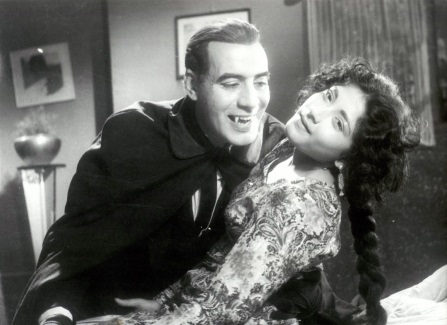
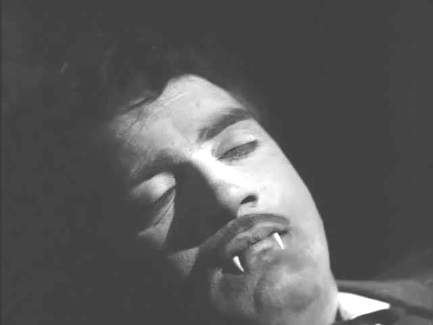
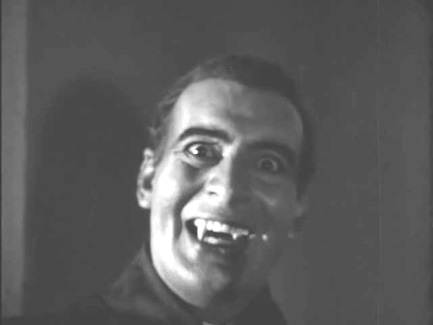
Sort of. He comes back to life but oddly he now has a taste for black capes,
has fangs and has a desire for blood. Warm blood. His assistant is his first
neck that he bites into. Though the film never shows the moment of contact.
That would have been too much for the censors and the audience. Kisses were
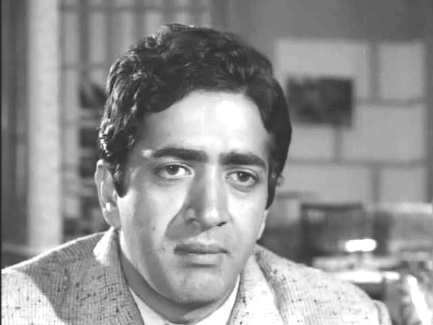
not even allowed. In one of those lovely campy scenes, a stranger comes to
the house and is invited to spend the night by the Professor.
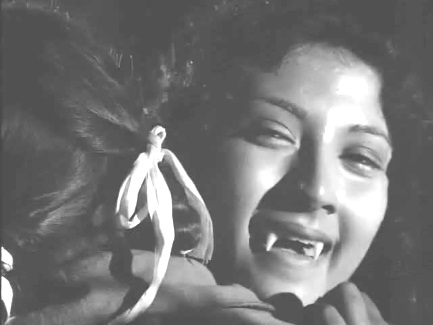
The stranger hears the sound of laughter
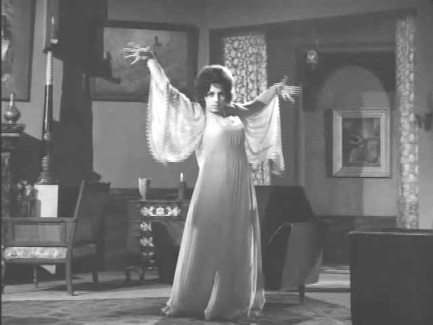
and investigates. It is the fleshy female assistant, now a vampire, who goes
into a weird dance meant to seduce the man but would have better luck with
a bull elephant. Let it be said that Pakistanis seemingly liked their actresses
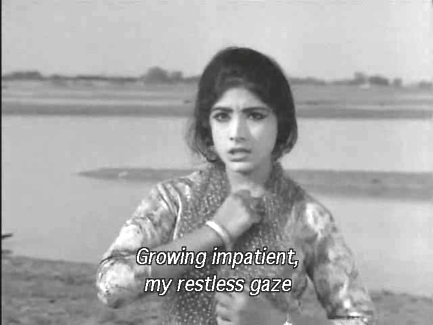
built strong enough to pull the ox cart. Even the main actress Deeba who
was a big star is no fragile flower. The film gets going when the Van Helsing
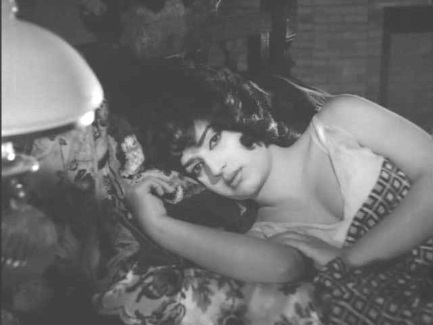
character shows up to kill the evil in the house, but not before dear Deeba
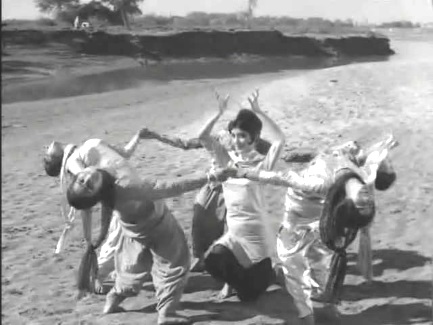
is bitten. And sings a few songs that were actually very nice. Women dancing
and swaying their hips in nightclubs. Would that be allowed today?