I doubt if there is any director
more courageous and some might say obsessive than Jafar Panahi from Iran.
Since his first feature film in 1995 (the immaculate The White Balloon) he
has consistently found himself in trouble with the Iranian government over
the content of his films and his refusal to let them censor them. Nearly
all of his films have been banned, he has been arrested, jailed, he has been
banned from making films for years, he has at times not been allowed legally
to leave the country. But he keeps making films. On the sly and then smuggling
them out for the world to see. And to win awards. He is an incredibly humane
storyteller who refuses to lose his humanity. His films over the years have
had to get smaller to avoid government intrusion. Filmed in a taxi, in a
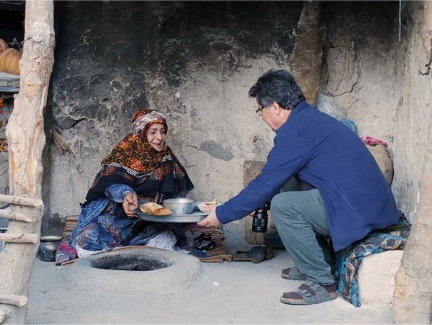
room, in a house with the curtains drawn. This one is barely more expansive
as part of it was shot in Turkey and the other part in an isolated dirt road
village. His films are small, personal and powerful. I expect most people
not familiar with Iran would watch them and think, why was this banned -
it seems harmless - but anything critical of the government whether direct
or indirect or critical of the religious authority will get banned. In a
way, this has possibly made him a better director - being forced to make
small no budget films but ones that impact you. He was arrested after this
film, but sure enough, in 2025 he directed another film. You get the feeling that if he stopped making
films, he would just turn into dust and vanish.
This one starts off slow and quiet - hard
to get a handle on - but as it proceeds it builds layers on top of layers
of the crushing restrictions of the country as well as the culture. By the
end, you are not sure what is real and what is fiction - but it will hurt.
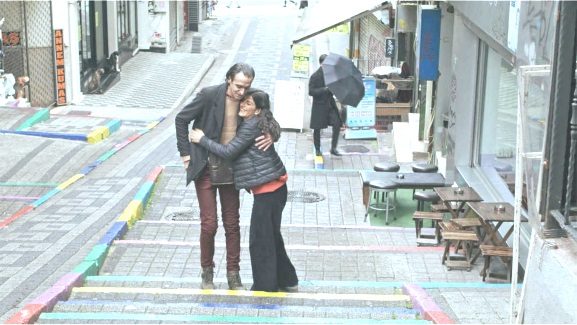
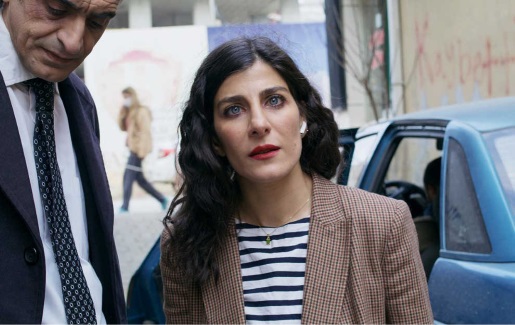
A young woman, Zara (Mina Kavani) and her boyfriend Bakhitiar (Bakhtiyar
Panjeei) are trying to get passports stolen from tourists to leave the country.
He has gotten one for Zara but she refuses to leave without him. Then suddenly
you hear "cut". They are filming a movie in Turkey pretending to be in Iran.
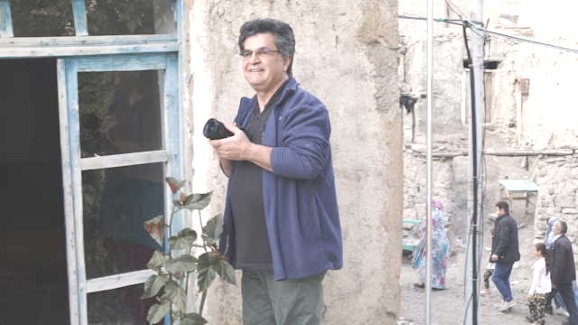
But since Jafar cannot leave the country and cannot direct in Iran, he is
directing remotely from this village near the border. He has rented a room
from the wonderful Ghanbar, who is thrilled to have such a famous tenant.
From this premise, two separate stories emerge.
The one that he is directing is in fact
not fiction (well yes and no). These two people are trying to leave Iran
and have agreed to allow him to shoot their story. Zara at one point faces
the camera and speaks directly to Jafar through his computer, "I have been
trying to leave for ten years. I have been arrested, I have been tortured,
I have been broken". It is devastating. And in this small village Jafar -
being Jafar by the way - he is playing himself - runs into a drama that involves
him. Watching it unfold and the village people is fascinating - it seems
so real.
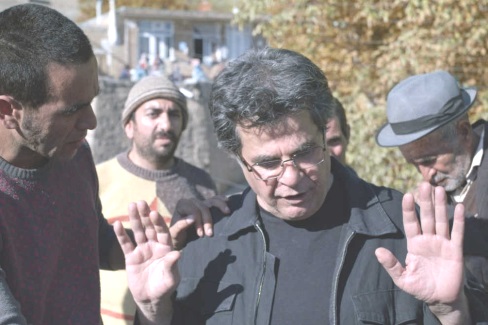
He has gone around the village at times
and snapped a few photos. The village elders come to him and say, you took
a picture of a young couple sitting under a tree. We need it. The woman was
promised to a man at birth - at the cutting of the umbilical cord - and she
was sitting with another man. We need the photo for proof. He says he has
no such photo. No one believes him because he is an outsider and he is pressured
to give it up. The Sheriff, gets involved, the Revolutionary Guard does as
well. He is not wanted - just tell me to leave - but Iranian hospitality
will not allow them to say that.
At one point in the film, Jafar is at the
border to Turkey. On the border. All you have to do is walk across and you
are free, his friend tells him. But he can't. In the end for all its faults,
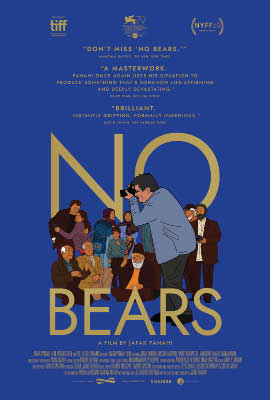
Iran is his country and he loves it. The title of the film comes from
a village saying. They tell people that they should not go out at night.
There are bears out. But the man later says, there are no bears. We just
try and scare people. You are safe. Go on your way. In Iran, there are bears.
They are real.