Mansfield
Park (1983) - 4.5
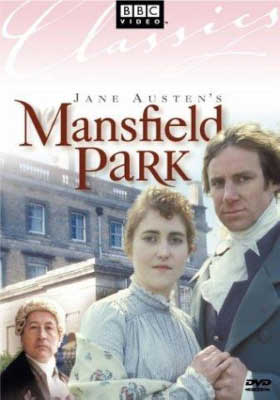
This is a six part BBC production of the
Jane Austen book published in 1814. Her third novel. Austen only wrote seven
novels, three of them published after her death. The entertainment business
wishes she had written more because all of them have been adapted to film.
Of the seven, I have read exactly none of them. Not for wont of trying. Sense
and Sensibility, Pride and Prejudice and Emma have all fallen under my gaze
but never for long. I just find her writing too polite and formal and the
books too damn long. The adaptations though are a different story. I enjoy
them a lot - her jabs at society and the status of women is cutting, subtle
and wonderful. And the sublime happy endings. I can't think of any that I
have not liked - till I met this TV series. I found this dull and drab like
a never-ending day at the beach and just wanting to leave and wash the sand
off. Once I started though, I had to finish - the masochist within - but
it took weeks. I was actually curious to see what the book was about as I
knew nothing of its contents.
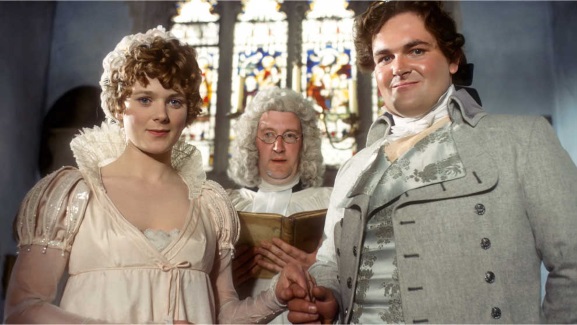
As a young girl Fanny Price goes to live
with the family of her uncle. He is very wealthy and owns Mansfield Park,
an imposing home with large grounds. He (Bernard Hepton - Toby in the Alec
Guiness Smiley TV series) and his slightly addled wife (Angela Pleasance
- daughter of Donald) have two sons and two daughters. Fanny (Sylvestra Le
Touzel) as she gets older becomes part of the family but also a part-servant
to the mother. The older brother (Christopher Villiers) becomes a wastrel
while the younger one (Nicholas Farrell) studies to become a parson. The
two daughters just want to marry well - meaning someone with wealth and position
in high society. It is a frivolous world. No one seems to work - just leisure,
parties and trips to London to party some more. Basically, the idle rich.
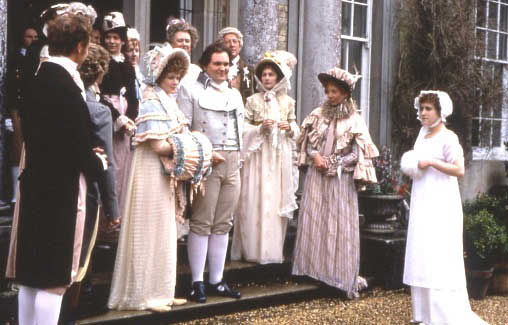
There are scandals, romance and hidden love.
Fanny is loved by all but never a true part of the family - just a person
who is around and reliable. The actress gives her no spark at I assume the
wish of the director but it gets frustrating waiting for her to come out
of her societal shell that has put her in a place from which she can't escape.
All of her acting is done with her eyes that she keeps down. She is a woman
and has nowhere to go. Clearly though never said, she is in love with her
cousin - the serious one - but he has his eye on a pretty and witty friend
- while her shallow brother makes pretense of being in love with Fanny. This
was a family that should have gone with a revolution. Parasites all. But
we are stuck with them for six hours.
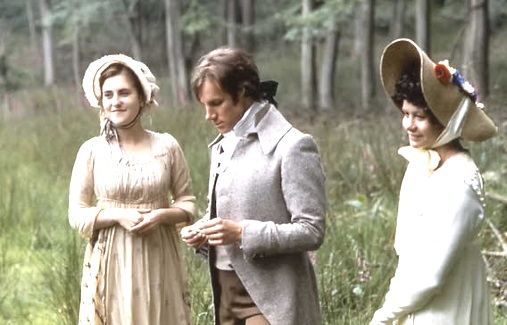
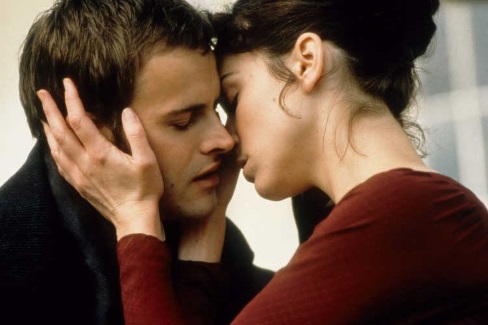
Mansfield Park
(1999) - 6.5
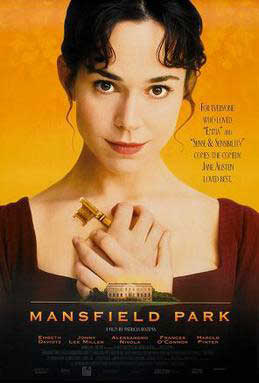
I came across this version of the Jane Austen
novel and was curious to see how it differed from the 1983 mini-series that
I watched a few months back. That one felt like a forced march in which the
"heroine" Fanny Price was so dull that she put me into a near coma. Insipid
and lacking in spirit and personality. But moralistic to her core. And it
was that dull unwavering moralism that in the end wins her the man she has
quietly loved. Not a great life lesson to women in our time.
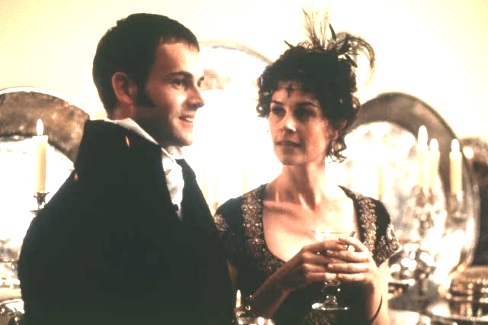
Fanny (Francis O'Connor) as played here
is very different. Witty, feminist, spirited and educated. A storyteller
like Austen. But in reading up on the novel, it is the 1983 version that
is much closer to the Fanny of the book. This has led to many literary scholars
analyzing her character over the years and coming to different conclusions
- some admiring her rigid moral stances and others considering her a tedious
prig. But they all seem to agree that this was Austen's most conservative
book about manners and morality. Director Patricia Rozema declared that she
wanted to make her film; not Austen's and she makes a number of changes.
Not so much to the overall plot but to the characters and social issues.
It is more feminist, anti-slavery and liberal. It certainly makes for a more
entertaining film.
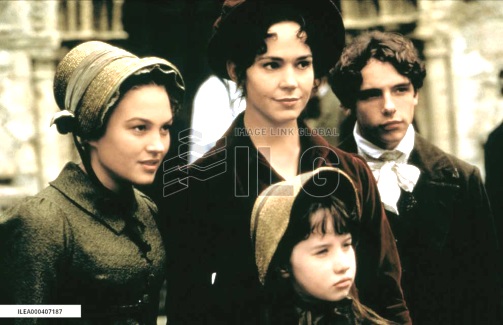
Fanny is ten years old when her impoverished
family sends her to live with wealthy relatives, the Bertram family. The
idle rich. Austen only really wrote about the upper class, the precarious
role of women and the social class and how they interacted with each other.
What is always present in the films is how they pass the time. A lot of visiting
each other, playing card games, picnics, dinners but there is a festering
boredom that pervades. The poor are too busy to be bored, but that class
of the wealthy living on the labors of others find filling their time to
be exhausting. None more so than the Bertram family. The father's money comes
from slaves in Antigua, the oldest son Thomas (James Purefoy) has the affliction
of many first born sons, gambling and debt, the two grasping daughters look
for wealthy husbands, the mother is always fatigued and useless and only
the second son Edmund seems beyond reproach. The father is played by the
great playwright Harold Pinter and Edmund by Jonny Lee Miller, who I just
saw recently in Emma in which he also played the decent one.
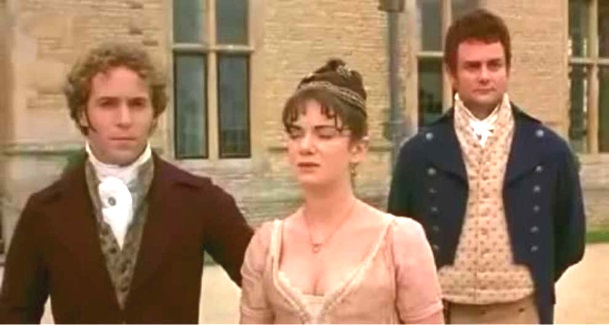
Two snakes in the form of charming well-spoken
guests come to stay and it throws everything out of its comfort zone. Only
Fanny sees through them. As played by O'Connor, Fanny has a sharp tongue
and sharper mind. Being minimalized by all but Edmund because of her poor
family has not beaten her down as it did in the 1983 version. She understands
her position in life and how dependent she is financially on the Bertram's
but she stands up to them when she feels in the right. And of course, this
Fanny also gets her man. Nicely shot, great scenic views and fine acting,
but it is lacking in the ravishing romanticism of Pride and Prejudice or
Sense and Sensibilities. The house is Kirby Hall, an astonishingly spectacular
building from the 1500s. Also in the cast is Hugh Bonneville who has made
a living playing upper-class English characters. Here as the catch of one
of the daughters, kind of pudgy and a dullard. Produced by Miramax