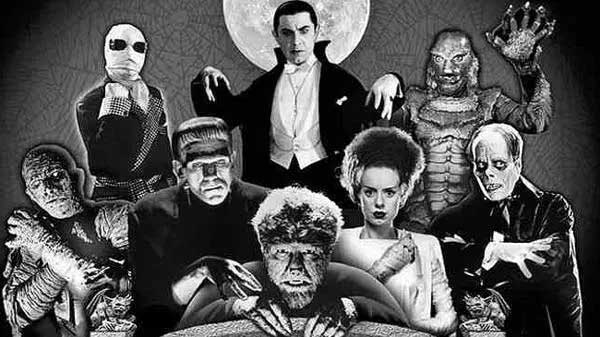
It is that time of year again. The Monster Mash,
worms in the brain, little creepy kids knocking on your door looking for
socialism, dragging out your favorite slithery slippery horror film from
the attic to watch again. I have to admit to not being a big horror fan of
post Hammer films. No great desire to watch men slashing, torturing and abusing
women. Perhaps, there has always been an element of misogyny in the horror
genre, but many recent horror films seem to soak in it. But give me a good
old Hammer Horror, a mad scientist from the 1940s or the Universal Monsters
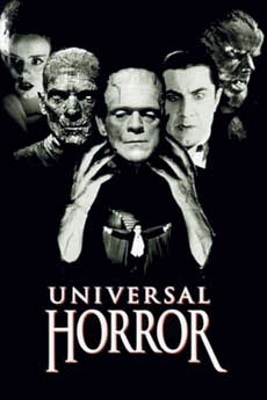
and I will sit there with a big stupid grin on my face. This documentary
is a solid 90-minute overview of the classic Universal horror films of the
1930s narrated by Kenneth Branagh though why we constantly have to listen
to a couple old geezers (Ray Bradbury being one) tell us how much the films
scared them when they were five years old puzzles me. More clips please instead.
The images from those films are some of the most memorable ever put to celluloid.
They burn into your memory. They may not be scary anymore - time has taken
care of that - but they were glorious. That all these years later, the Universal
films are still loved and watched attests to their greatness.
Under the ownership of German-Jewish immigrant
Carl Laemmle who formed Universal Pictures in 1915 when he was 48-years old.
Like so many of those early film pioneers he began with nickelodeons, then
producing independent films before Universal. Universals' stock and
trade during the silent era was low-budget Westerns and other quickies. There
were two famous exceptions to that - both horror films with spectacular sets
- both starring Lon Cheney - The Hunchback of Notre Dame and The Phantom
of the Opera. But it was his son Carl Jr. who was given the studio to manage
as a present when he was 20-years old who was much more ambitious than his
father producing big films like All Quiet on the Western Front and Waterloo
Bridge - and the horror films. Unfortunately, these films piled on the debt
and in 1936 the Laemmle's had to sell Universal but they had already set
in motion the great horror films.
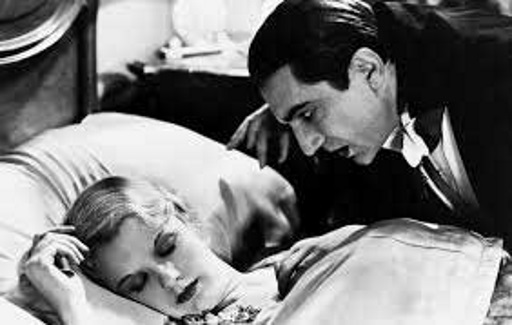
It began with Dracula. Carl Sr. thought
it was a terrible idea as did many others. Who wants to see a man sucking
blood? Well, as it turned out a lot of people did. They wanted Lon Cheney
for Dracula as the film was being directed by his often-times collaborator
Tod Browning. But Cheney died. They didn't want the Hungarian who had played
Dracula on Broadway but eventually they felt they had no choice. It was a
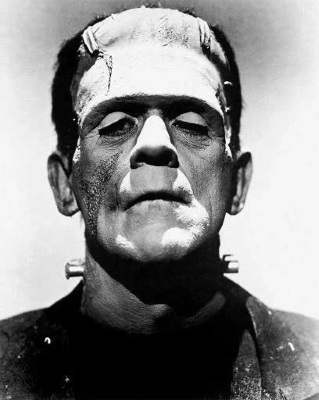
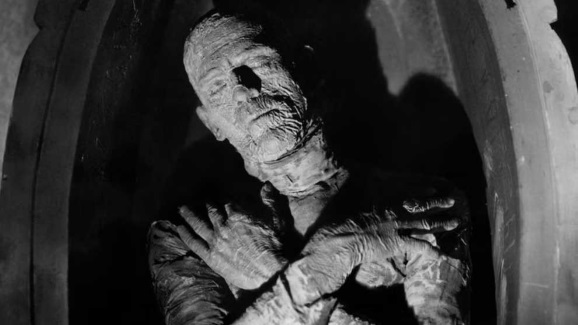
big hit and horror was in fashion. In a period of three years from 1931 to
1933, Universal created four franchises - Dracula, Frankenstein, The Mummy
and the Invisible Man. Not just for Universal, but these creations have become
global phenomenon's. This was in what is considered Universal's First
Cycle of Horror.
After the Laemmle's sold the studio and
England cracked down on allowing horror in the theaters, there was a few
years when horror went out of fashion. But it came back in 1939 with sequels
to some of the earlier films and also another franchise, the Wolfman. The
new owners had to make budget cuts and the horror icons of the earlier days
left Universal. Few of these films in the Second Cycle had the creative genius
or budget as the earlier ones did and the documentary doesn't spend much
time on them. Many fall into the B film category, but some are still quite
entertaining such as The Ghost of Frankenstein, Frankenstein Meets the Wolf
Man, Son of Dracula and House of Frankenstein. These of course led to Hammer's
success in horror. And those are the films I love.