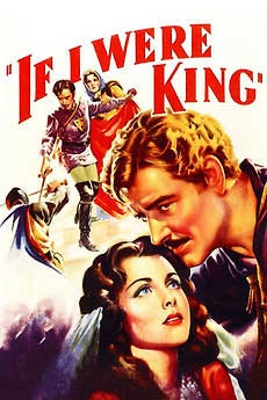
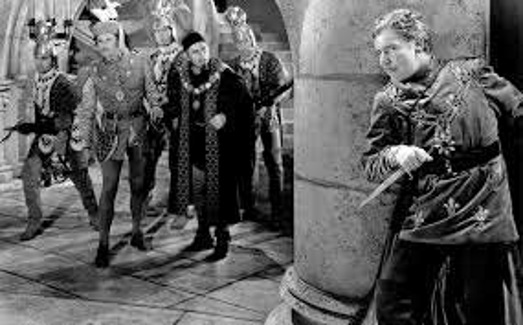
A fine adventure tale of kings, poets and rogues
in medieval France. In the grand tradition of old Hollywood with lavish sets,
costumes and enough extras to fill a small city. It is a marvelous story
based on a play from 1902 and a remake of a 1920 silent film. What is of
some interest is that the two main characters were historical figures and
the plot sort of manages to fit itself into reality. Very sort of. The Burgundians
never laid siege to Paris and Francoise Villon never was put in charge of
the military for a week. But there was a Villon whose poetry has survived
these many years and Louis XI was on the throne of France. But I am getting
ahead of the story.
The Burgundians (a region of France) were
at war with Louis XI and in the film have laid siege to Paris for a year.
The people are nearing starvation though the royalty is still eating quite
well. Villon the poet, swordsman and thief gladly steals from the Royal stores
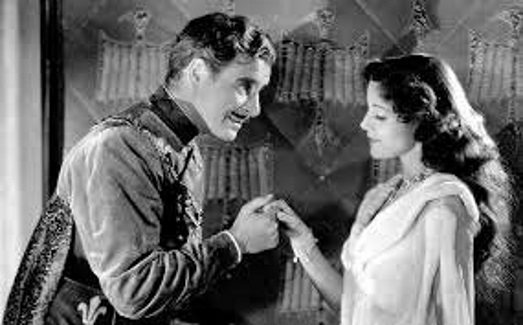
and shares the food with the downtrodden. He is played with the charm, polish
and eloquence of Ronald Colman. That great voice of his is put to great use.
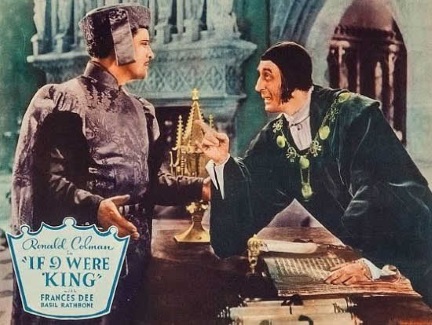
The King is portrayed by an equally fine actor, Basil Rathbone, with mounds
of make-up to look conniving and evil and a shrill voice to match. Rathbone
was nominated for an Oscar for Supporting Actor. He was a year away from
his most famous portrayal, Sherlock Holmes.
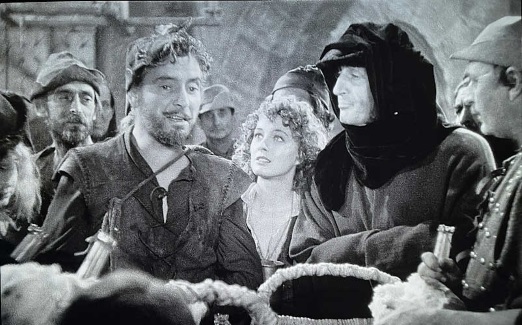
To track down a traitor, the King disguises
himself and goes to a low life tavern and overhears Villon give his spiel,
If I Were King. Villon is arrested and though not made the King, he is put
in charge of the military. You have one week to save Paris or it is off to
the hangman. Enough time to romance the lovely Francis Dee.
The script is from Preston Sturges and as
one would expect is quite literate. The poems of Villon are translations
of his real poems. Louis XI actually has a good reputation with historians.
He was intent on unifying all the regions of France into a nation, ended
the One Hundred Year War with England, kept the peace, oversaw a growth in
infrastructure and the economy. Villon on the other hand was constantly in
trouble with the law both with robbery and murder and was banished from Paris
and became a wanderer and wrote two books of poetry that have been translated
into English.