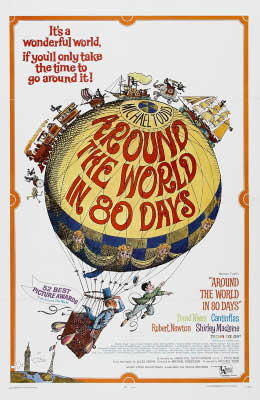
Well, I went around the world in
three hours and that included an introduction by Edward Murrow, entry music,
an intermission, a lengthy scroll of end credits and exit music. I like traveling
this way. This is really a magnificently ambitious film on one level and
a bit of a drudge on another. But director Michael Anderson and producer
Mike Todd put it all out there in an attempt to create a spectacle. And they
do - especially I imagine if you saw this in 1956. It was a big hit at the
box office and won the Oscar for Best Picture over The Ten Commandments and
Giant. That may look silly now but at the time, this was a big deal. The
logistics are astonishing. Hundreds of actors, thousands of extras, over
a hundred different sets, train and ship models and photography in the locations
of various countries.
This at times feels more like a travelogue
than a film, but it is always stunning in what is captured in India, Europe
and America. How they kept this on schedule took the planning of a Napoleon.
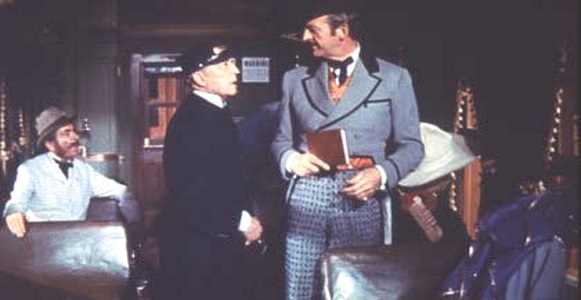
Just getting all the many many cameos from famous actors to the set and on
the right day was worthy of an Oscar. I picked out most of the cameos but
definitely not all. It does go on for too long in our ADS times and it flags
at times but damn, they throw in everything - songs, performances, a bullfight,
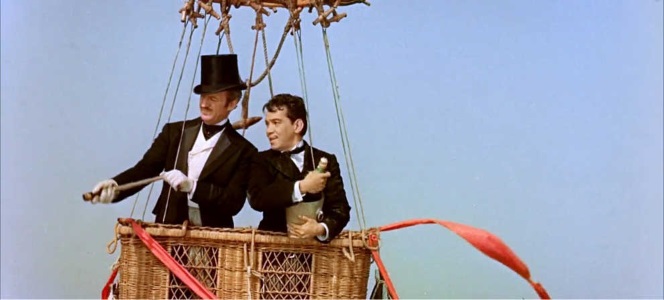
an attack by Native Americans, a suttee, a balloon trip and lots more. Every
set-up has something going on and a cameo by a famous actor - at least famous
back then.
Still, it never really grabs you on a dramatic
or emotional level. That may be because everyone and their cousin knows by
now that Philias Fogg will make it and win the bet. When David Niven was
offered the role, he said he would do it for free and then later said he
was glad that Todd didn't take him up on it. I am not sure that Niven actually
had to leave the studio - he never is seen in a scene that was clearly shot
outside of America. The magic of Hollywood. It looks like his manservant
Passepartout (Cantinflas) may have actually been in Japan but otherwise it
is a terrific melding of sets and photography of locations. The actors must
have been surprised when they saw the film.
Verne wrote this in 1872 and the film sticks
amazingly closely to the source material. The only major thing added was
the balloon trip because Todd wanted the scenic shots of Europe from up high.
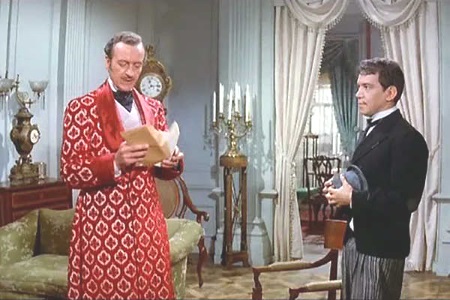
But all the other things are in the book. Niven plays the perfect English
gentleman with a stick up his ass very well. Tailor made for Niven. Fogg
is very wealthy, has no job and spends his days sticking to a schedule, playing
whist at the club and demanding that his toast and bath water be at exactly
the right temperature. He hires his umpteenth valet after firing another
one - this is Cantinflas, a very popular Mexican actor throughout the Spanish
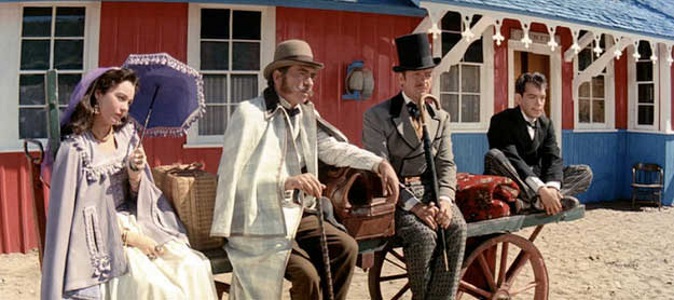
speaking world. His character is in truth the hero of the book-film even
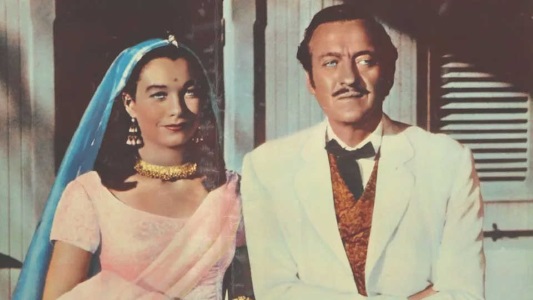
saving the Indian Princess from suttee, but she of course falls for the stick
in the ass. Played adorably by Shirley MacLaine in only her third film.
The detective who thinks that Fogg is a
bank robber and sticks to them like an annoying fly is played by Robert Newton,
famous for playing Long John Silver. He was also an alcoholic and had to
promise Todd not to touch the evil demon while the film was in production,
Apparently, as soon as the film wrapped up, he went on a bender that killed
him. So many cameos - too many to note but a few favorites were Buster Keaton,
Robert Morley, Charles Boyer, Ronald Colman, Reginald Denny, Peter Lorre,
George Raft, Marlene Dietrich, Frank Sinatra, John Carradine, Joe E. Brown,
John Mills and all the guys on the ship - Andy Devine, Jack Oakie, Victor
McLaglen and Edmund Lowe. The film is an eye-full though perhaps
not meant for today's audience.