Director: John Ford
Year: 1939
Rating: 7.0
Year: 1939
Rating: 7.0
John Ford had been directing
films since his first in 1917. That was a short and a Western. During the
Silent era, he was to direct about 60 films - most lost - and many of them
Westerns - but also an assortment of other genres. When the Talkies began,
for some reason he stayed away from Westerns. Perhaps because they had become
B pictures playing as second or third features on the bill. In 1939, Ford
began telling the American story - or at least the one he wanted to - which
for my generation became the one we believed in. Through school and films,
we were taught the American myth of our heroic march west. Our American Destiny.
There have been only a few generations of Americans that have in truth been worth a damn. That are the backbone of our belief system in who we are. The Founders of course who managed miraculously to patch thirteen colonies together and make it stick and become the first nation to have a democratic republic. Another generation is the people who refused to stay put and kept pushing westwards to settle - or perhaps colonize -- the land against extreme dangers from war, from starvation, from the elements. It is easy to demonize them now for their treatment of the Natives, but still these people had more balls than any American today. The last generation to do great things was of course my father's generation - made it through the Great Depression, stopped Fascism, defeated Communism, Pax Americana, passed the beginnings of a safety net and Voting and Civil Rights. Clearly, one can poke holes into all these generations with multiple sins, but they are our mythology.
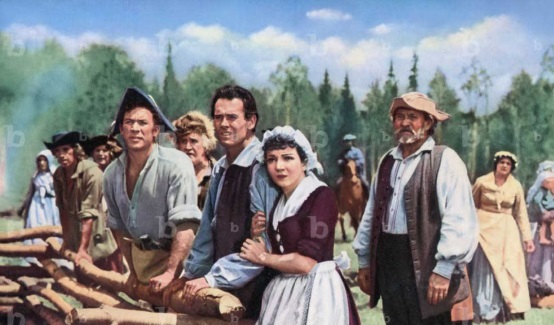
Ford extolled all of them in his films. How much he believed it I don't know, but his films are such wonderful pieces of Americana that it is hard not to be caught up in them. In 1939 he directed three films that told our story. He went back to Westerns with Stagecoach, his first since 1926 - but he took that genre out of B territory and made a classic bringing Westerns into the Mainstream for the next few decades. Next up was Young Mr. Lincoln, an astonishingly humanistic and hopeful film about Lincoln but also the nation. And then there is this film, Drums Along the Mohawk, which encompasses two of the generations that I have mentioned. Ford also discovered the two male actors that he kept going back to - Henry Fonda and John Wayne. Wayne of course became as much a landmark in his Westerns as Monument Valley - but Ford followed this with Fonda in The Grapes of Wrath - another part of the American story. The War took Ford away for three years but when he returned, he first made a war film with Wayne (They Were Expendable) and then a Western with Fonda (My Darling Clementine).
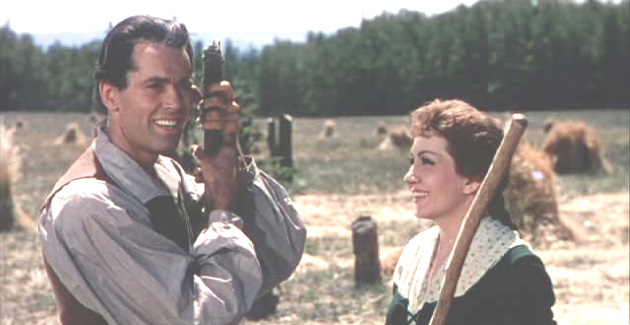
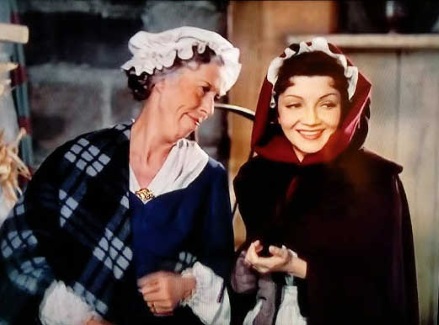
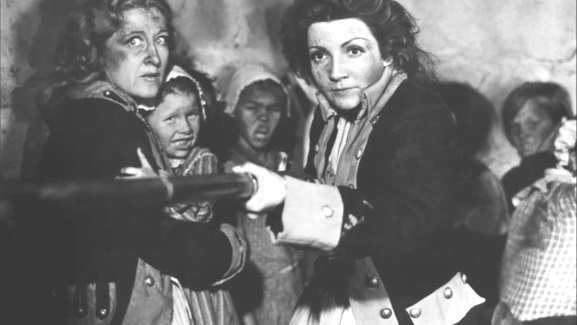
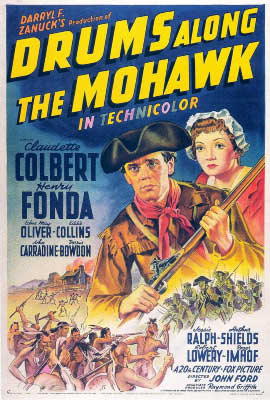
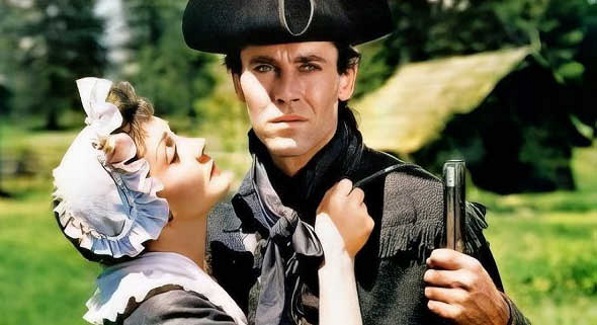
Drums Along the Mohawk is a tale of settlers - in this case early in the movement - who built farms in Western New York - and fight off Native Americans and the British during the Revolutionary War. It is mainly about community and perseverance. Fonda and Claudine Colbert are newly married and leave the civilization of Albany for the wilds of the Mohawk Valley. She initially freaks out at the primitive life and the Natives, but she adjusts and turns out to be as tough as a tree trunk. The community has built a fort for safety when the war breaks out the English and their Native allies attack. The Natives that sided with the British - not all did - did so because the British promised them that they would stop the white settlements. And they persevere through death, the burning of their farms, a miscarriage - for Ford this was the American spirit that conquered a continent. The final 20-minutes is as intense as it gets. And though these days I am not feeling very optimistic about my country - this will clearly not be one of the great generations - the ending made me think of how great we once could be. There is a fine cast along with Fonda and Colbert - Edna May Oliver who won the Academy Award for Supporting Actress, Ward Bond who was to become a regular in Ford films, John Carradine who plays the villainous Tory, Jessie Ralph as one of the female settlers, Arthur Shields as the Reverend who has to kill a man and Francis Ford, now forgotten but he was John Ford's brother and as a director of silents, he brought his brother into the business.
There have been only a few generations of Americans that have in truth been worth a damn. That are the backbone of our belief system in who we are. The Founders of course who managed miraculously to patch thirteen colonies together and make it stick and become the first nation to have a democratic republic. Another generation is the people who refused to stay put and kept pushing westwards to settle - or perhaps colonize -- the land against extreme dangers from war, from starvation, from the elements. It is easy to demonize them now for their treatment of the Natives, but still these people had more balls than any American today. The last generation to do great things was of course my father's generation - made it through the Great Depression, stopped Fascism, defeated Communism, Pax Americana, passed the beginnings of a safety net and Voting and Civil Rights. Clearly, one can poke holes into all these generations with multiple sins, but they are our mythology.
Ford extolled all of them in his films. How much he believed it I don't know, but his films are such wonderful pieces of Americana that it is hard not to be caught up in them. In 1939 he directed three films that told our story. He went back to Westerns with Stagecoach, his first since 1926 - but he took that genre out of B territory and made a classic bringing Westerns into the Mainstream for the next few decades. Next up was Young Mr. Lincoln, an astonishingly humanistic and hopeful film about Lincoln but also the nation. And then there is this film, Drums Along the Mohawk, which encompasses two of the generations that I have mentioned. Ford also discovered the two male actors that he kept going back to - Henry Fonda and John Wayne. Wayne of course became as much a landmark in his Westerns as Monument Valley - but Ford followed this with Fonda in The Grapes of Wrath - another part of the American story. The War took Ford away for three years but when he returned, he first made a war film with Wayne (They Were Expendable) and then a Western with Fonda (My Darling Clementine).
Drums Along the Mohawk is a tale of settlers - in this case early in the movement - who built farms in Western New York - and fight off Native Americans and the British during the Revolutionary War. It is mainly about community and perseverance. Fonda and Claudine Colbert are newly married and leave the civilization of Albany for the wilds of the Mohawk Valley. She initially freaks out at the primitive life and the Natives, but she adjusts and turns out to be as tough as a tree trunk. The community has built a fort for safety when the war breaks out the English and their Native allies attack. The Natives that sided with the British - not all did - did so because the British promised them that they would stop the white settlements. And they persevere through death, the burning of their farms, a miscarriage - for Ford this was the American spirit that conquered a continent. The final 20-minutes is as intense as it gets. And though these days I am not feeling very optimistic about my country - this will clearly not be one of the great generations - the ending made me think of how great we once could be. There is a fine cast along with Fonda and Colbert - Edna May Oliver who won the Academy Award for Supporting Actress, Ward Bond who was to become a regular in Ford films, John Carradine who plays the villainous Tory, Jessie Ralph as one of the female settlers, Arthur Shields as the Reverend who has to kill a man and Francis Ford, now forgotten but he was John Ford's brother and as a director of silents, he brought his brother into the business.