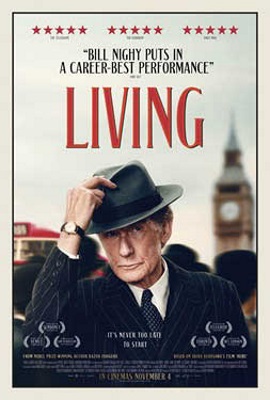
Director: Oliver Hermanus
Year: 2022
Rating: 7.0
Or Dying. At a high level, we all have two major themes in our lifetime. How do we live our life and how do we face death. In the first part of that equation, we have to make a million choices a day and hope that they are the right ones. More often than not, they are not. How we face our demise is a different animal. Most of us unless our death is abrupt and brief will have time to consider it, to contemplate it in the wee hours of the night. Meet it with hysterics, fatalism, dignity, humor - not as many choices. Over the past five years, I have known a lot of people who died. Each one leaves a black hole inside of you, some bigger than others but a piece of you is gone - a conversation that will never happen, a greeting never given, a kiss never realized. This small quiet film is a meditation on both life and death. How did we live and how will we die. This is a remake of Akira Kurosawa's Ikiru which I admit never having seen. The script was authored by the great Kazuo Ishiguro who I will admit I have never read but he is a Nobel Prize winner in Literature. The film is beautifully rendered and the dialogue impeccably polite and restrained.
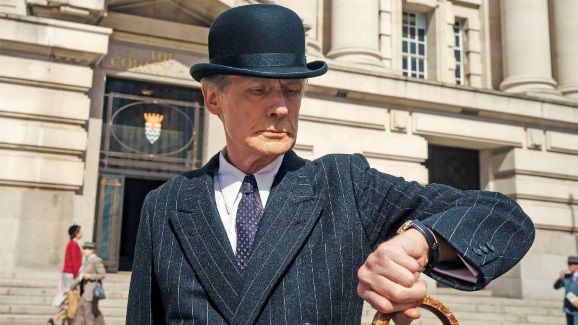
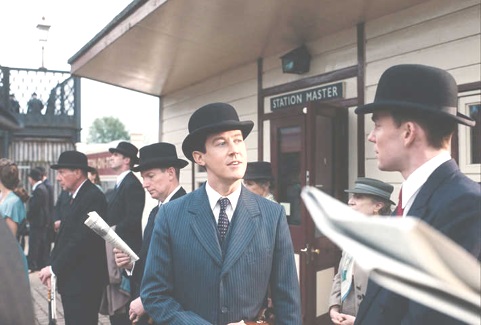
It is set in London during the 1950s and the colors feel as much influenced by Sirk's classic 50's films as they do by the time period. In a great opening scene, London flies before us - the buses, the cars and fashions from the 1950s as a generation of Post War primarily men go off to work. A group of them meet at the train station - all dressed similarly in pin stripe suits, bowler hat and an umbrella. They all are employed at the government office of Public Works where their job seems to primarily consist of burying or passing along citizen requests. Their desks set up in half square as if attached to each other like umbilical cords. The government bureaucracy is a Dickensian nightmare of no agency taking responsibility and passing it to another department. Wakeling (Alex Sharp) is a newcomer to this world and the other men quickly fill him in on what he needs to do to fit in. Their boss is Williams (Bill Nighy), a taciturn slow talking elderly man who has been a civil servant as long as life it seems. Born into a pin stripe - his wish as a young boy was to be a Gentleman. He has achieved that it seems. The only female in the department is the secretary Miss Harris played by Aimee Lou Wood of recent White Lotus fame. She is the only light in an otherwise dismal gloomy office of stacked papers.

All very sedate and British or at least how Brits seemed to be in films before the Kitchen and Sink films of the 1960s upended everything and showed us the working class. These are all middle-class white men passing the years in obscurity and pointlessness. But they don't realize that. They are Civil Servants by God and respected members of society and after many years of accomplishing nothing, they may be promoted. And get a pension when they retire. Then Williams is told by his doctor that he is dying from cancer and has perhaps six months to live. Williams has to decide how to spend his remaining time. The film never turns into the sympathetic tear-jerker that I was expecting - too British for that - and it keeps its distance from death. It is just there. It is not often that Bill Nighy gets the lead role - he is one of those actors that you always welcome in character roles - that great even paced voice - his placid exterior - he is perfect in this role. Aimee Lou Wood is also terrific in a role that gets bigger as the film moves along. It feels interesting that a film as gentle and literary as this is even made these days with no big stars - a small blessing.
Year: 2022
Rating: 7.0
Or Dying. At a high level, we all have two major themes in our lifetime. How do we live our life and how do we face death. In the first part of that equation, we have to make a million choices a day and hope that they are the right ones. More often than not, they are not. How we face our demise is a different animal. Most of us unless our death is abrupt and brief will have time to consider it, to contemplate it in the wee hours of the night. Meet it with hysterics, fatalism, dignity, humor - not as many choices. Over the past five years, I have known a lot of people who died. Each one leaves a black hole inside of you, some bigger than others but a piece of you is gone - a conversation that will never happen, a greeting never given, a kiss never realized. This small quiet film is a meditation on both life and death. How did we live and how will we die. This is a remake of Akira Kurosawa's Ikiru which I admit never having seen. The script was authored by the great Kazuo Ishiguro who I will admit I have never read but he is a Nobel Prize winner in Literature. The film is beautifully rendered and the dialogue impeccably polite and restrained.
It is set in London during the 1950s and the colors feel as much influenced by Sirk's classic 50's films as they do by the time period. In a great opening scene, London flies before us - the buses, the cars and fashions from the 1950s as a generation of Post War primarily men go off to work. A group of them meet at the train station - all dressed similarly in pin stripe suits, bowler hat and an umbrella. They all are employed at the government office of Public Works where their job seems to primarily consist of burying or passing along citizen requests. Their desks set up in half square as if attached to each other like umbilical cords. The government bureaucracy is a Dickensian nightmare of no agency taking responsibility and passing it to another department. Wakeling (Alex Sharp) is a newcomer to this world and the other men quickly fill him in on what he needs to do to fit in. Their boss is Williams (Bill Nighy), a taciturn slow talking elderly man who has been a civil servant as long as life it seems. Born into a pin stripe - his wish as a young boy was to be a Gentleman. He has achieved that it seems. The only female in the department is the secretary Miss Harris played by Aimee Lou Wood of recent White Lotus fame. She is the only light in an otherwise dismal gloomy office of stacked papers.
All very sedate and British or at least how Brits seemed to be in films before the Kitchen and Sink films of the 1960s upended everything and showed us the working class. These are all middle-class white men passing the years in obscurity and pointlessness. But they don't realize that. They are Civil Servants by God and respected members of society and after many years of accomplishing nothing, they may be promoted. And get a pension when they retire. Then Williams is told by his doctor that he is dying from cancer and has perhaps six months to live. Williams has to decide how to spend his remaining time. The film never turns into the sympathetic tear-jerker that I was expecting - too British for that - and it keeps its distance from death. It is just there. It is not often that Bill Nighy gets the lead role - he is one of those actors that you always welcome in character roles - that great even paced voice - his placid exterior - he is perfect in this role. Aimee Lou Wood is also terrific in a role that gets bigger as the film moves along. It feels interesting that a film as gentle and literary as this is even made these days with no big stars - a small blessing.