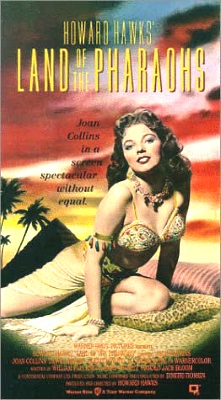
Director: Howard Hawks
Year: 1955
Rating: 6.0
I have had this DVD sitting around collecting mold for years ever since I picked it up cheap way back. It has been on my hard drive as well for ages, but every time I look through it for a film, I ended up skipping over it. But not too long ago I watched one of Martin Scorsese's film essays and he mentioned that this was one of his favorite films. Never one to go against Scorsese's taste in films, I finally got around to it. Next time I see Martin, I may have to have a word with him. This has all the dressing of an epic but decides instead to become a hackneyed historical melodrama. Epic films were back in style in the 1950s after having gone out of fashion since the Silent Era. Ben-Hur, the Ten Commandments, Quo Vadis and a number of Biblical epic films made their way into theaters. Shot in stunning color and widescreen, they were a response to TV which was keeping folks home watching Westerns and detective shows in black and white. These big epic films set in ancient times with thousands of extras were a big hit. But not this one, so much.
It is directed by Howard Hawks, but it is rarely if ever mentioned among discussions of his works. From one telling, Hawks was sitting around a pool on the French Riviera when suddenly he asked out loud, "Which way is Egypt?" and then "I think I will build a pyramid". Perhaps, he had just read about The Egyptian with Victor Mature and Jean Simmons that was released in 1954. It turns out that Jack Warner was sailing on the Riviera and they quickly strike a deal. Hawks was hot after Gentleman Prefer Blondes. He was also excited about filming in CinemaScope (which in the end he didn't like). He had no script or cast but had designs made and the beginning of the pyramid being dug. He hired Faulkner to help write the script. Faulkner's time in Hollywood is legendary. Studios loved having his name in the credits, but Faulkner did very little writing that ever ended up in the finished product. He often said he hated movies and never watched them. But Hawks liked him and the two would go on drinking binges together. Hawks, Faulkner and a few other writers holed up in Europe to knock out a script. Working in the morning but much less so after a few bottles of wine at lunch. Faulkner wanted to make a pirate movie and none of them knew anything about ancient Egypt.
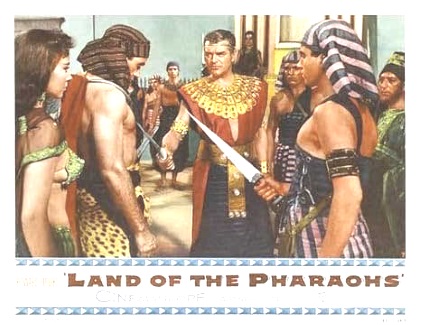
They finally decided to make the Pharaoh Khufu aka Cheops the main character in their film and his obsession to build a totally secure pyramid to be buried in with his enormous wealth. Khufu is a historical figure - living approximately around 2500 B.C and ruling for anywhere from 20 to 50 years. Not a lot is known about him, but he was the Pharaoh who built the biggest pyramid of them all, the Great Pyramid at Giza. Everything else in the film is fictional. Hawks wanted extras. Lots of extras. More than any film ever, so with the co-operation of the Egyptian army he has a shot with 10,000 extras. The government of Egypt was very excited about Hawks shooting a film in their country - they had only one request - no Jews - and Hawks being an anti-Semite clearly had no problem with that. In the end, the film was banned from being played in Egypt because the actor who played the architect (James Robertson Justice) looked too Jewish.
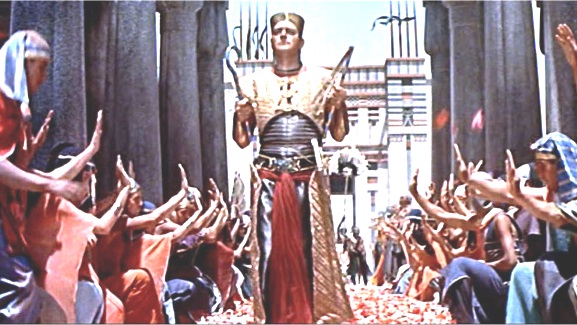
As for the cast, Hawks chose Jack Hawkins to play the Pharaoh. Hawkins is a fine actor but a commanding Pharaoh he is not. For the femme fatale Hawks first tried to get a young actress from Switzerland whose screen test he saw. But Ursula Andress signed on to another studio. Next, he liked a model but in her screen test with Hawkins, she bit his hand so deeply that it bled. That was a no go. After that he tried for Gina Lollobrigida, but she was not available. Finally, he settled on Joan Collins who was suitably sexy and put her in brown-face. No one else in the cast were well-known at all. The shooting in Egypt came first - all the location outdoor shots - with various problems of course. At one point the army extras had to leave because of frictions with Israel, another time the extras mutinied and attacked the crew, the heat was oppressive, dust storms were common and then they ran into Ramadan in which the Egyptians could not eat or drink during the day. In the end, the outdoor scenes are by far the most impressive - the cutting of the blocks of stone and transporting them - something historians are still not really sure how it was done. Aliens?
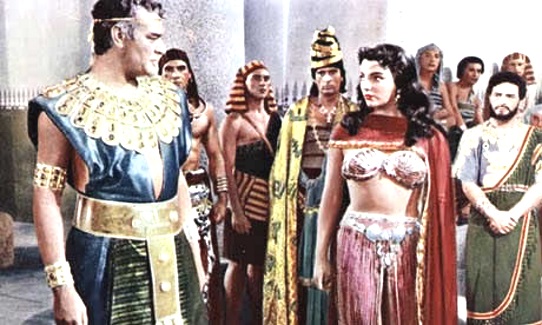
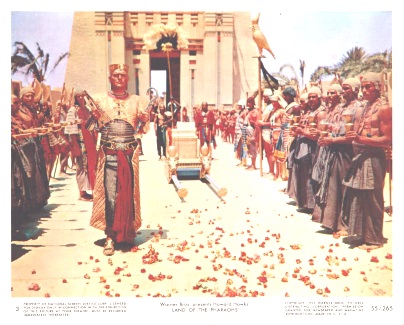
The film opens with an impressive scene as the Pharaoh returns from a military victory and the line of men entering the city is lengthy and in various costumes and on camels (which had not been introduced to Egypt at the time - neither had the wheel). It is hard not to wonder whether this was the inspiration of the scene of Elizabeth Taylor entering Rome in Cleopatra. Khufu is obsessed with his mounds of gold and jewels and wants to take them with him when he dies. Tomb Raiders must have been a problem back even then because he wants a pyramid that cannot be broken into. His own builders cannot come up with anything other than complicated labyrinths and so he turns to a slave who he knows to have skills. In return for freeing his people, he will build him an impenetrable tomb in which once sand is released huge heavy doors will drop down making it impossible to get to the main room where all the goodies are. Oh, the Pharaoh says, and we will of course have to kill you when it is done. You will take the secret of the Pyramid with you. Well, why not because it will take years to build it.
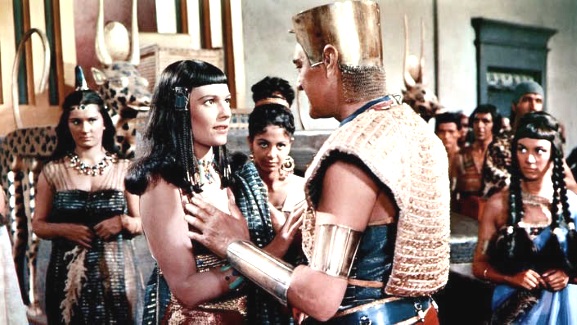
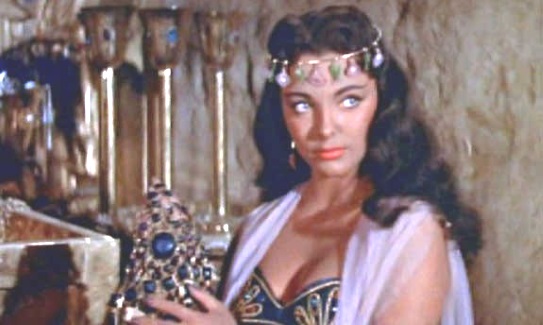
In the other main thread of the film, he falls for an emissary from Cyprus - our Joan Collins -- who says to him - you can either have treasure or you can have me. Wise man that he is, he takes her. Or maybe not so wise. She is a schemer and a dreamer. A dreamer of all that treasure. Putting it into a pyramid seems so pointless. She also falls for the Captain of the Guard and him for her. He is played by Sydney Chaplin, son of Charlie - and he and Collins became real lovers during this and partied so much that she put on so much weight that Hawks had to yell at her. You can't look pregnant in this film! This whole section of the film plays out like a drawing room melodrama and the dialogue is stiff and tedious. In the end Faulkner contributed only one line of dialogue - "So, how is the job getting along". But he drank well. The film lost money and Hawks was so discouraged that he didn't direct another film for four years. Back to what he was good at - a Western, Rio Bravo. Historians are not exactly sure when but that before the 5th century BC when Herodotus visited, the tomb had been cleared of its treasures.
Year: 1955
Rating: 6.0
I have had this DVD sitting around collecting mold for years ever since I picked it up cheap way back. It has been on my hard drive as well for ages, but every time I look through it for a film, I ended up skipping over it. But not too long ago I watched one of Martin Scorsese's film essays and he mentioned that this was one of his favorite films. Never one to go against Scorsese's taste in films, I finally got around to it. Next time I see Martin, I may have to have a word with him. This has all the dressing of an epic but decides instead to become a hackneyed historical melodrama. Epic films were back in style in the 1950s after having gone out of fashion since the Silent Era. Ben-Hur, the Ten Commandments, Quo Vadis and a number of Biblical epic films made their way into theaters. Shot in stunning color and widescreen, they were a response to TV which was keeping folks home watching Westerns and detective shows in black and white. These big epic films set in ancient times with thousands of extras were a big hit. But not this one, so much.
It is directed by Howard Hawks, but it is rarely if ever mentioned among discussions of his works. From one telling, Hawks was sitting around a pool on the French Riviera when suddenly he asked out loud, "Which way is Egypt?" and then "I think I will build a pyramid". Perhaps, he had just read about The Egyptian with Victor Mature and Jean Simmons that was released in 1954. It turns out that Jack Warner was sailing on the Riviera and they quickly strike a deal. Hawks was hot after Gentleman Prefer Blondes. He was also excited about filming in CinemaScope (which in the end he didn't like). He had no script or cast but had designs made and the beginning of the pyramid being dug. He hired Faulkner to help write the script. Faulkner's time in Hollywood is legendary. Studios loved having his name in the credits, but Faulkner did very little writing that ever ended up in the finished product. He often said he hated movies and never watched them. But Hawks liked him and the two would go on drinking binges together. Hawks, Faulkner and a few other writers holed up in Europe to knock out a script. Working in the morning but much less so after a few bottles of wine at lunch. Faulkner wanted to make a pirate movie and none of them knew anything about ancient Egypt.
They finally decided to make the Pharaoh Khufu aka Cheops the main character in their film and his obsession to build a totally secure pyramid to be buried in with his enormous wealth. Khufu is a historical figure - living approximately around 2500 B.C and ruling for anywhere from 20 to 50 years. Not a lot is known about him, but he was the Pharaoh who built the biggest pyramid of them all, the Great Pyramid at Giza. Everything else in the film is fictional. Hawks wanted extras. Lots of extras. More than any film ever, so with the co-operation of the Egyptian army he has a shot with 10,000 extras. The government of Egypt was very excited about Hawks shooting a film in their country - they had only one request - no Jews - and Hawks being an anti-Semite clearly had no problem with that. In the end, the film was banned from being played in Egypt because the actor who played the architect (James Robertson Justice) looked too Jewish.
As for the cast, Hawks chose Jack Hawkins to play the Pharaoh. Hawkins is a fine actor but a commanding Pharaoh he is not. For the femme fatale Hawks first tried to get a young actress from Switzerland whose screen test he saw. But Ursula Andress signed on to another studio. Next, he liked a model but in her screen test with Hawkins, she bit his hand so deeply that it bled. That was a no go. After that he tried for Gina Lollobrigida, but she was not available. Finally, he settled on Joan Collins who was suitably sexy and put her in brown-face. No one else in the cast were well-known at all. The shooting in Egypt came first - all the location outdoor shots - with various problems of course. At one point the army extras had to leave because of frictions with Israel, another time the extras mutinied and attacked the crew, the heat was oppressive, dust storms were common and then they ran into Ramadan in which the Egyptians could not eat or drink during the day. In the end, the outdoor scenes are by far the most impressive - the cutting of the blocks of stone and transporting them - something historians are still not really sure how it was done. Aliens?
The film opens with an impressive scene as the Pharaoh returns from a military victory and the line of men entering the city is lengthy and in various costumes and on camels (which had not been introduced to Egypt at the time - neither had the wheel). It is hard not to wonder whether this was the inspiration of the scene of Elizabeth Taylor entering Rome in Cleopatra. Khufu is obsessed with his mounds of gold and jewels and wants to take them with him when he dies. Tomb Raiders must have been a problem back even then because he wants a pyramid that cannot be broken into. His own builders cannot come up with anything other than complicated labyrinths and so he turns to a slave who he knows to have skills. In return for freeing his people, he will build him an impenetrable tomb in which once sand is released huge heavy doors will drop down making it impossible to get to the main room where all the goodies are. Oh, the Pharaoh says, and we will of course have to kill you when it is done. You will take the secret of the Pyramid with you. Well, why not because it will take years to build it.
In the other main thread of the film, he falls for an emissary from Cyprus - our Joan Collins -- who says to him - you can either have treasure or you can have me. Wise man that he is, he takes her. Or maybe not so wise. She is a schemer and a dreamer. A dreamer of all that treasure. Putting it into a pyramid seems so pointless. She also falls for the Captain of the Guard and him for her. He is played by Sydney Chaplin, son of Charlie - and he and Collins became real lovers during this and partied so much that she put on so much weight that Hawks had to yell at her. You can't look pregnant in this film! This whole section of the film plays out like a drawing room melodrama and the dialogue is stiff and tedious. In the end Faulkner contributed only one line of dialogue - "So, how is the job getting along". But he drank well. The film lost money and Hawks was so discouraged that he didn't direct another film for four years. Back to what he was good at - a Western, Rio Bravo. Historians are not exactly sure when but that before the 5th century BC when Herodotus visited, the tomb had been cleared of its treasures.